Pages

Showing posts with label Unsolved. Show all posts

Saturday, July 8, 2023

The Bible Belt Strangler

Listen to the article:

Within the dark annals of criminal history, few serial killers have captivated the public's imagination like the figure known as the Bible Belt Strangler. Roaming through the heartland of America, this elusive predator left a trail of terror, targeting unsuspecting victims, and confounding law enforcement agencies. In this article, we delve into the chilling details of the crimes, the haunting crime scenes, and the potential suspects, as we try to unravel the mystery surrounding the Bible Belt Strangler.


The Victims of the Bible Belt Strangler

The Bible Belt Strangler claimed the lives of innocent individuals who fell prey to his sadistic inclinations. Though the exact number of victims remains unknown, law enforcement agencies have linked at least 10 murders to this vicious serial killer. The victims hailed from various backgrounds, spanning different ages, genders, and races, united only by their unfortunate encounter with the Bible Belt Strangler.

Within the chilling narrative of the Bible Belt Strangler, the true heartbreak lies in the innocent lives lost to this remorseless serial killer. Their disappearances, steeped in enigma, and the subsequent discovery of their lifeless bodies paint a grim tableau of the horrors inflicted upon them. In this article, we pay solemn tribute to all ten known victims, shedding light on their disappearances, the harrowing circumstances surrounding their discoveries, and the enduring impact on their grieving loved ones.

Pictures of victims


Sarah Thompson

Sarah Thompson, a 27-year-old nurse from Lexington, vanished on a moonlit evening as she left her late shift at the local hospital. Despite tireless efforts to find her, days turned into agonizing weeks until her lifeless body was discovered deep in the woods, her vacant eyes silently bearing witness to the unimaginable torment she endured.


Michael Collins

Michael Collins, a 19-year-old college student with aspirations of becoming an architect, disappeared without a trace on his way home from a late-night study session. The sudden void left by his absence reverberated through the community, prompting exhaustive searches. Tragically, his body was eventually found concealed beneath the floorboards of an abandoned building, forever extinguishing the light of his promising future.


Maria Rodriguez

Maria Rodriguez, a 42-year-old mother of two, was last seen leaving her workplace, a local grocery store, on an ordinary Wednesday evening. Her disappearance left her children anxiously awaiting her return, but as hours turned into days, their hopes were shattered. It was a farmer who stumbled upon Maria's remains in a desolate field, her life cruelly cut short, leaving her children orphaned and her family inconsolable.


Jonathan Simmons

Jonathan Simmons, a 32-year-old high school teacher known for his unwavering passion for literature, vanished under mysterious circumstances after attending an evening book club meeting. The community rallied, plastering missing person posters throughout the city, desperately yearning for Jonathan's safe return. Tragically, his lifeless body was discovered, grotesquely posed beneath a dilapidated church, marking the end of a life dedicated to nurturing young minds.


Emily Wilson

Emily Wilson, a 45-year-old artist renowned for her vibrant paintings, vanished on a crisp autumn morning during her routine walk along the riverbank. Friends and fellow artists organized an extensive search, clinging to the hope that her artistic spirit would guide her back to safety. That hope was brutally shattered when her lifeless body emerged from the murky waters, an eerie contrast to the beauty she had once created.


James Peterson

James Peterson, a 50-year-old accountant known for his gentle nature, inexplicably vanished one fateful evening after leaving a local diner. As his family and friends tirelessly combed the city, their desperation grew with each passing day. Sadly, James' lifeless body was discovered in a remote wooded area, forever stealing his warmth and kindness from the world.


Olivia Barnes

Olivia Barnes, a 22-year-old aspiring actress, disappeared without a trace after attending an evening audition at a local theater. The news of her vanishing sent shockwaves through the performing arts community, igniting fervent efforts to find her. Yet, hope turned to despair when Olivia's lifeless body was uncovered in an abandoned warehouse, her dreams forever unfulfilled.


Daniel Roberts

Daniel Roberts, a 35-year-old construction worker known for his infectious laughter, went missing during a routine lunch break from his job site. Concerned colleagues scoured the area, desperately hoping to find him unharmed. Tragically, Daniel's lifeless body was discovered in a shallow grave, the vibrant spirit that once resonated with joy forever silenced.


Sophia Reynolds

Sophia Reynolds, a 16-year-old high school student brimming with dreams, vanished one evening after attending a local community event. Panic gripped her family and friends as they embarked on an exhaustive search, clinging to the belief that she would be found safe. The devastating truth was revealed when Sophia's lifeless body was found hidden in an abandoned barn, snuffing out the potential that radiated from her youthful spirit.


Robert Foster

Robert Foster, a 58-year-old retired veteran and beloved member of his community, disappeared under mysterious circumstances following a neighborhood gathering. The community rallied together, determined to bring him home. Their worst fears were realized when Robert's lifeless body was discovered in a remote wooded area, his absence leaving an irreplaceable void in the lives of those who cherished him.

Pictures of the victims


As we reflect upon the victims of the Bible Belt Strangler, we are confronted with the profound tragedy that their lives were cut short by unspeakable acts of violence. Each disappearance and subsequent discovery of a lifeless body shattered the hopes and dreams of their families and friends, leaving a legacy of grief and unanswered questions. Their stories serve as a solemn reminder of the darkness that can lurk within our society, urging us to be vigilant in the protection of our communities.

As the search for justice continues, we honor the memory of these ten known victims: Sarah Thompson, Michael Collins, Maria Rodriguez, Jonathan Simmons, Emily Wilson, James Peterson, Olivia Barnes, Daniel Roberts, Sophia Reynolds, and Robert Foster. May their souls find peace, and may their stories inspire us to create a world where such horrors are never repeated. Let us stand united in the pursuit of justice and the preservation of the preciousness of life, ensuring that the Bible Belt Strangler's reign of terror is brought to an end, and that the victims are never forgotten.


Details of the Crime Scenes

The crime scenes left behind by the Bible Belt Strangler were shrouded in a macabre ambiance. Each murder exhibited eerie similarities, characterized by meticulous planning and a signature modus operandi. The victims were often found in secluded areas, such as wooded patches, abandoned buildings, or remote spots along rural roads. The killer meticulously strangled his victims with a ligature, leaving no room for escape or mercy. Authorities discovered disturbing patterns of post-mortem rituals, hinting at the killer's fascination with religious symbolism and the Bible.


Potential Suspects

Despite extensive investigations, the identity of the Bible Belt Strangler remains a haunting enigma. Law enforcement agencies have pursued numerous leads, but the lack of concrete evidence and the killer's cunning tactics have thwarted their efforts. However, several potential suspects have emerged throughout the investigation, each with their own unsettling connections to the crimes.


The Preacher

A charismatic and influential figure within the local community, this suspect drew suspicion due to his deep-rooted religious fervor. Rumors circulated that he harbored a dark secret, using his position of trust to prey on vulnerable individuals who sought spiritual guidance.


The Outsider

Some investigators speculate that the Bible Belt Strangler could be an itinerant loner, blending seamlessly into the fabric of society while leading a transient lifestyle. This suspect might have no fixed address, making it harder for authorities to trace his movements.


The Phantom

A more controversial theory suggests that the Bible Belt Strangler could be a law enforcement officer or someone closely affiliated with the criminal justice system. This hypothesis stems from the killer's ability to evade capture and potentially exploit inside knowledge to outsmart investigators.


The reign of terror inflicted by the Bible Belt Strangler continues to haunt communities throughout the heartland of America. The victims, forever etched in the collective memory, serve as a somber reminder of the darkness that can lurk in even the most devout regions. As law enforcement agencies persist in their pursuit of justice, the elusive killer's identity remains elusive, leaving behind a legacy of fear and unanswered questions. Only time will tell if the shadows will finally recede, and the Bible Belt Strangler will be brought to justice, providing closure to the victims and their grieving families.

The Highway of Tears Killer: Unsolved Mysteries Along Canada's Notorious Highway

Introduction


In the vast wilderness of British Columbia, Canada, there exists a stretch of road that carries with it a haunting legacy. This is the story of the Highway of Tears, a notorious highway where numerous women have gone missing or been found murdered. It is a tale of unsolved mysteries, shattered families, and a community fighting for justice. This article delves into the dark chapters of the Highway of Tears killer, shedding light on the victims, the investigations, and the ongoing efforts to find answers.


The Highway of Tears: A Tragic Legacy

A billboard warning women not to hitchhike on the highway of tears.


The Highway of Tears refers to a 724-kilometer (450-mile) stretch of Highway 16 between Prince George and Prince Rupert in British Columbia. This remote and desolate road has gained infamy due to the alarming number of women who have disappeared or been murdered along its path. The exact number of victims remains unknown, but estimates range from 18 to over 40. Many of these cases are still unsolved, leaving communities in a state of anguish and fear.


The Victims: Lives Cut Short


Among the victims of the Highway of Tears are young women from various Indigenous communities. These women had hopes, dreams, and aspirations, but their lives were abruptly ended, leaving their loved ones devastated. Their stories are heart-wrenching reminders of the tragic consequences of unresolved crimes.


The Missing and Murdered Women:


The list of missing and murdered women along the Highway of Tears is extensive. Indigenous women, who are already vulnerable to systemic issues, have disproportionately borne the brunt of these crimes. Families continue to grapple with the pain of uncertainty, not knowing the fate of their loved ones.


The Heartbreaking Stories:


Each victim along the Highway of Tears has a unique story that deserves to be told. Whether it's the young student pursuing her education, the mother with dreams for her children, or the adventurer seeking new experiences, their lives were cut short in unimaginable ways. The stories of these women humanize the tragedy and emphasize the urgency for justice.

pictures of some of the missing women


Investigation and Controversies


The Long Road to Justice:


The investigations into the Highway of Tears cases have been plagued by challenges, resulting in few convictions. Law enforcement agencies have faced difficulties due to the vast geographic area, limited resources, and the complex nature of these crimes. As a result, families have been left waiting for answers, desperate for closure.


Police Response and Criticisms:


The response of the police to the Highway of Tears cases has faced scrutiny and criticism. Some families have voiced concerns about delays, lack of communication, and biases in the investigations. These factors have contributed to a sense of distrust and frustration within the affected communities.


The Role of Systemic Issues:


Beyond the individual investigations, the Highway of Tears cases have shed light on larger systemic issues. Poverty, racism, and marginalization have disproportionately affected Indigenous communities, leaving them vulnerable to violence and exploitation. Addressing these systemic issues is crucial for preventing further tragedies.


Community Action and Support


Advocacy and Awareness:


In the face of adversity, communities along the Highway of Tears have come together to advocate for justice and raise awareness. Indigenous activists, concerned citizens, and organizations have worked tirelessly to keep the cases in the public eye. They have organized rallies, walks, and campaigns to demand action and accountability.


Support for Families:


Recognizing the immense pain and trauma endured by the families of the victims, various support networks have been established. These organizations offer emotional support, resources, and assistance to those affected. They strive to ensure that the families are not left to navigate this tragedy alone.


Recent Developments and Future Hopes


Advances in Technology:


As technology evolves, there is renewed hope that it will provide crucial breakthroughs in solving the Highway of Tears cases. DNA analysis, forensic advancements, and improved communication between law enforcement agencies offer a glimmer of hope for progress. These developments are essential in bringing justice to the victims and closure to their families.


Calls for Accountability:


The tragedies along the Highway of Tears have sparked a larger conversation about accountability. Advocates and families demand that those responsible for the crimes be held accountable, regardless of the passage of time. Their determination serves as a reminder that justice should not be bound by limitations.


Conclusion


The Highway of Tears stands as a chilling reminder of the unsolved mysteries that haunt Canada's past. The lives lost along this desolate road represent a profound tragedy that demands attention and action. As communities unite, advocates raise their voices, and advancements in technology offer hope, the Highway of Tears killer may one day be brought to justice. Until then, the families of the victims continue to search for answers and healing.


FAQs


The Highway of Tears Killer - FAQ

Monday, May 29, 2023

Smiley Face Killer Theory: Are the Deaths Connected?

Listen to the article:
Smiley Face Killer Theory cover showing smiley face graffiti beside a dark river and bridge


For decades, young men have vanished after nights out with friends, only to be found days, weeks, or even months later in rivers, lakes, and other bodies of water.

Many of their deaths were classified as accidental drownings.

But two retired New York City detectives came to believe that at least some of them were anything but accidents.

Kevin Gannon and Anthony Duarte argued that similarities between a number of these deaths pointed toward something far more disturbing: multiple murders potentially connected by the same offender—or even a network of killers.

One detail attracted particular attention.

Near some of the locations connected with the deaths, investigators reported finding graffiti depicting a simple smiley face.

The idea became known as the Smiley Face Killer Theory, or sometimes the Smiley Face Murder Theory.

At one point, Gannon and Duarte publicly discussed approximately 40 deaths across 25 cities and 11 states that they believed could be connected. The proposed victims were often young men who disappeared after drinking before eventually being recovered from water.

The theory has attracted enormous attention from true-crime investigators, journalists, families, and amateur researchers.

It has also been strongly challenged.

The FBI said it had found no evidence establishing links between the deaths or supporting the existence of a serial killer or group of serial killers. Independent homicide researchers have also identified serious problems with the proposed connections.

So what exactly is the Smiley Face Killer Theory?

Where did it begin?

And is there actually evidence that these mysterious drowning deaths are connected?

The answer is far more complicated than the disturbing nickname suggests.


What Is the Smiley Face Killer Theory?

The Smiley Face Killer Theory proposes that some young men whose deaths were classified as drownings were actually victims of homicide.

Rather than accidentally falling into water after drinking, proponents believe certain victims may have been abducted or attacked before their bodies were placed in rivers or lakes.

The theory became widely known through the work of retired NYPD detectives Kevin Gannon and Anthony Duarte, who began comparing drowning cases from different parts of the United States.

According to the investigators, many cases appeared to share characteristics.

The proposed victims were frequently young men.

Many were college students.

Several disappeared after leaving bars, parties, or social gatherings.

Their bodies were later recovered from water.

And in some cases, investigators claimed to have discovered smiley face graffiti near locations associated with the deaths.

Gannon and Duarte eventually argued that the similarities could indicate something much larger than a single murderer.

They suspected multiple offenders might be operating in different locations.

It was an extraordinary claim—and one that would become highly controversial.


The Death of Patrick McNeill

The origins of the Smiley Face Killer Theory can be traced to the disappearance of Patrick McNeill in New York City.

McNeill was a 21-year-old Fordham University student.

On February 16, 1997, he went drinking with friends at a Manhattan bar. In the early hours of the following morning, McNeill left the establishment.

He never made it home.

A massive mystery followed.

McNeill remained missing for weeks until his body was eventually recovered from the water near Brooklyn.

His death was classified as an accidental drowning associated with alcohol intoxication.

But Detective Kevin Gannon, who had worked on McNeill's disappearance, became convinced the official explanation did not adequately account for what had happened.

Gannon continued examining the case even after his involvement with the official investigation ended.

The death of Patrick McNeill and the questions surrounding his final hours would ultimately become the foundation upon which the wider Smiley Face theory was built.

As Gannon and other investigators began looking at additional drowning deaths, they believed they were seeing familiar patterns.

Patrick McNeill was no longer viewed by them as an isolated case.

He became the beginning of something much larger.


A Pattern of Young Men Found in Water

One mysterious drowning is a tragedy.

Several superficially similar cases can begin to look like a pattern.

Gannon and Duarte eventually examined deaths across numerous states and cities.

ABC News reported in 2008 that the detectives were connecting approximately 40 deaths across 25 cities in 11 states.

Many of the proposed cases followed a broad sequence.

A young man went out drinking.

At some point during the night, he became separated from friends.

He disappeared.

Searches initially found nothing.

Then his body was discovered in a nearby river, lake, or other waterway.

The circumstances naturally raised questions for some families.

How had the victim reached the water?

Why hadn't searchers found him earlier?

Could he have entered the water somewhere else?

Were injuries consistent with an accidental fall?

And was alcohol enough to explain what happened?

These questions became central to the growing list of alleged Smiley Face Killer victims.

But similarities alone cannot establish that crimes are connected.

Young adults frequently socialize around alcohol, and many American cities and college towns are located near rivers and lakes. That makes determining whether these deaths form a meaningful statistical pattern much more difficult than simply listing their similarities.

Nevertheless, several cases would become particularly important to the theory.

One of them changed the conversation entirely.


Chris Jenkins and the Case Ruled a Homicide

On Halloween night in 2002, 21-year-old University of Minnesota student Christopher "Chris" Jenkins disappeared after visiting a Minneapolis bar.

Months later, his body was recovered from the Mississippi River.

Initially, Jenkins' death appeared to resemble many of the other cases later associated with the Smiley Face theory.

A young college student had been drinking.

He disappeared.

His body was found in water.

But the Jenkins investigation eventually took a crucial turn.

Authorities reclassified his death as a homicide.

That distinction made the Chris Jenkins murder extremely important to proponents of the Smiley Face Killer Theory.

Here was a young man who had initially appeared to be another drowning victim but whose death authorities later determined involved foul play.

For Gannon and Duarte, the case suggested that at least one suspicious drowning could conceal a murder.

But it did not establish that Jenkins' death was connected to McNeill's death or any of the dozens of other cases.

That distinction remains essential.

Evidence that one victim was murdered is not automatically evidence of a nationwide serial-killing operation.


Who Are Kevin Gannon and Anthony Duarte?

The Smiley Face theory is inseparable from the investigators who developed it.

Kevin Gannon and Anthony Duarte were retired NYPD detectives who spent years examining suspicious drowning cases after Gannon's involvement in the Patrick McNeill investigation.

They eventually worked alongside criminal-justice professor D. Lee Gilbertson and others.

Their approach often involved reconstructing where a body might have entered the water rather than simply examining where it was eventually recovered.

Rivers move bodies.

Currents, water levels, temperature, obstacles, and decomposition can all influence where remains ultimately surface.

If investigators could estimate a probable entry point, Gannon and Duarte believed they could identify the actual location where a crime may have occurred.

It was while examining these areas that the investigators said they repeatedly encountered unusual graffiti.

Most famously, they found smiley faces.

The investigation of Kevin Gannon, Anthony Duarte, and the origins of the Smiley Face theory ev

Sunday, May 28, 2023

The West Mesa Bone Collector Case

Listen to the article:

In the annals of crime, certain cases captivate the public's imagination with their enigmatic nature. One such case is that of the West Mesa Bone Collector, a haunting and unresolved mystery that unfolded in Albuquerque, New Mexico. This chilling tale of buried secrets and unanswered questions has left investigators and the local community searching for answers. Join us as we delve into the details surrounding this unsettling case.


Discovery of the Victims

In February 2009, a startling discovery was made on the West Mesa of Albuquerque. While conducting a routine inspection for a housing development, a woman stumbled upon a human bone protruding from the ground. Authorities were immediately notified, and a meticulous investigation ensued. What they uncovered was beyond anyone's worst nightmares.

Satellite image of where the bodies were found


The Grisly Scene

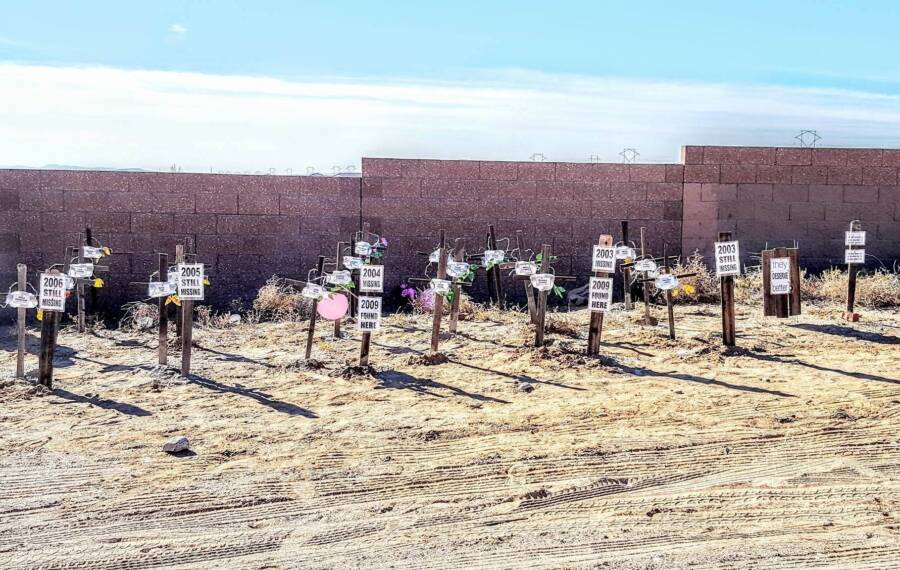
As investigators began to excavate the area, they unearthed a macabre burial ground. The remains of eleven women were found buried in shallow graves, all of whom were believed to be young prostitutes who had gone missing between 2003 and 2005. The victims were mostly Hispanic, ranging in age from 15 to 32 years old. This grim revelation sent shockwaves through the community, raising concerns about a potential serial killer roaming the streets of Albuquerque.


Remembering the Victims of the West Mesa Bone Collector

In the tragic saga of the West Mesa Bone Collector case, it is important to remember that behind the chilling headlines and unsolved mysteries are the lives of the victims themselves. Each woman whose remains were discovered on that fateful day in Albuquerque had a unique story, dreams, and loved ones who still mourn their loss. In this article, we pay tribute to the victims, ensuring that their memory lives on amidst the darkness that envelops their untimely deaths.

Memorial site where the bodies were discovered


1. Monica Candelaria

Monica Candelaria, aged 22 at the time of her disappearance, was a vibrant young woman who loved dancing and spending time with her family. She had dreams of becoming a nurse and was known for her infectious laughter and caring nature. Monica's loved ones remember her as a beacon of light and continue to seek justice on her behalf.


2. Veronica Romero

Veronica Romero, just 27 years old, was a mother of two young children. She possessed a warm and loving spirit, always putting her family first. Veronica's relatives recall her as a devoted mother who worked tirelessly to provide for her children, highlighting her determination and resilience.


3. Cinnamon Elks

Cinnamon Elks, 31 years old when she went missing, had a passion for art and a talent for capturing beauty on canvas. She was a caring friend who often lent a listening ear to those in need. Cinnamon's creativity and compassionate nature left a lasting impact on those who knew her, and her absence is deeply felt.


4. Victoria Chavez

Victoria Chavez, only 26 years old, had dreams of becoming a cosmetologist. Described as a free spirit with a love for adventure, she possessed an infectious zest for life. Victoria's friends and family remember her for her radiant smile and her ability to bring joy into any room.


5. Jamie Barela

Jamie Barela, 15 years old at the time of her disappearance, was the youngest victim. She was a vibrant teenager who enjoyed spending time with her friends and had dreams of a bright future. Jamie's family cherishes memories of her youthfulness and the love she brought into their lives.


6. Evelyn Salazar

Evelyn Salazar, 27 years old, was known for her kind heart and willingness to help others. She possessed a nurturing spirit and aspired to work with children. Evelyn's loved ones remember her as a compassionate soul who left a lasting impression on those she encountered.


7. Syllannia Edwards

Syllannia Edwards, aged 15, was a teenager with a vivacious personality. She had dreams of becoming a fashion designer and was admired for her unique sense of style. Syllannia's friends and family recall her as a vibrant young woman who embraced life with enthusiasm and creativity.


8. Doreen Marquez

Doreen Marquez, 24 years old, was a mother of two who loved spending time with her children. She was known for her resilience and determination to provide a better life for her family. Doreen's memory lives on through her children, who will always cherish the love she gave them.


9. Julie Nieto

Julie Nieto, 23 years old, had a passion for cooking and dreamed of opening her own restaurant someday. She had a magnetic personality and a warm smile that drew people towards her. Julie's family and friends remember her for her ambition and infectious laughter.


10. Michelle Valdez

Michelle Valdez, aged 22 at the time of her disappearance, was a young woman with dreams of becoming a singer. She had a captivating voice that mesmerized those who heard it. Michelle's loved ones honor her memory by keeping her love for music alive, often gathering to sing songs she cherished.


11. Unidentified Victim

Among the victims discovered in the West Mesa Bone Collector case is an unidentified woman. Despite exhaustive efforts by investigators and the community, her true identity remains unknown. She is a stark reminder of the ongoing challenges faced in solving this tragic case.


Remembering Their Lives

While the circumstances surrounding their deaths are horrifying, it is crucial to remember the lives these women led before their untimely demise. They were daughters, sisters, mothers, and friends—individuals with dreams, aspirations, and love to give. The memories shared by their loved ones offer glimpses into the vibrant spirits that were extinguished too soon.


Community Support and Advocacy

The discovery of the West Mesa Bone Collector's victims shook the community of Albuquerque to its core. Their tragic fate prompted increased awareness and activism surrounding the issue of missing and murdered women, particularly among marginalized populations. Community organizations and support groups emerged to provide resources, support, and advocacy for the families affected by these heinous crimes.


The Quest for Justice

While the West Mesa Bone Collector case remains unsolved, the pursuit of justice continues. Law enforcement agencies, alongside dedicated cold case investigators, tirelessly work to uncover new leads and technological advancements that may shed light on the identity of the perpetrator. Families and loved ones of the victims remain hopeful that one day justice will be served and closure will be granted.


Never Forgotten

As time passes, it is imperative that we do not allow the victims of the West Mesa Bone Collector to fade into oblivion. Their lives mattered, and their memories deserve to be honored. By remembering their names, sharing their stories, and supporting efforts to bring their perpetrator to justice, we keep their memory alive and remind ourselves of the urgency to address violence against women in our society

The victims of the West Mesa Bone Collector were more than mere statistics—they were cherished individuals whose lives were abruptly taken away. Through their stories, we gain insight into their vibrant spirits, dreams, and the impact they had on those around them. As the search for answers continues, let us remember these women, ensuring they are never forgotten, and let their memory serve as a rallying cry for justice and a safer world for all.


The Hunt for the Perpetrator

Law enforcement agencies mobilized swiftly, launching an intensive search for the individual or individuals responsible for these heinous acts. The case was dubbed the West Mesa Bone Collector, owing to the gruesome manner in which the victims' bodies were concealed. Despite their best efforts, investigators faced numerous challenges in piecing together the puzzle.


Exploring Possible Suspects in the West Mesa Bone Collector Case

The West Mesa Bone Collector case, a haunting unsolved mystery, has left investigators and the Albuquerque community grappling for answers. As the search for justice continues, attention naturally turns toward potential suspects who may have played a role in the heinous crimes. In this article, we delve into some of the individuals who have emerged as possible suspects in the perplexing saga of the West Mesa Bone Collector.


1. Lorenzo Montoya

Lorenzo Montoya was a convicted rapist and a known violent offender who lived in close proximity to the burial site. His criminal history and the timing of his parole release in 2006 led investigators to scrutinize his involvement in the case. Tragically, Montoya died in 2006, before the discovery of the victims, leaving lingering questions about his potential role in the crimes.


2. Joseph Blea

Joseph Blea, also known as the "Mid-School Rapist," was a notorious sex offender active in Albuquerque during the 1980s. While he was not directly linked to the West Mesa Bone Collector case, his history of violence and his modus operandi raised suspicions. Blea died in 2015 without any conclusive evidence linking him to the crimes.


3. Other Potential Perpetrators

Given the complex nature of the West Mesa Bone Collector case, other individuals have been considered as possible suspects. Law enforcement agencies have explored connections to known serial killers, examined sex offender registries, and pursued leads based on tips from the community. However, no definitive evidence has emerged linking any specific individual to the crimes.


Challenges in Identifying the West Mesa Bone Collector

The investigation into the West Mesa Bone Collector case has been riddled with challenges, hindering the identification of a conclusive suspect. Some of the difficulties faced by investigators include:

1. Lack of Physical Evidence: The burial site was discovered years after the victims went missing, resulting in the degradation of crucial physical evidence. This obstacle has made it challenging to establish a clear link between the perpetrator and the crimes.

2. Transient Lifestyle of Victims: The victims involved in the case were often engaged in high-risk activities and led transient lifestyles, making it difficult to establish a definitive timeline of their disappearances and potential connections to suspects.

3. Complexity of Missing Persons Cases: The Albuquerque area has seen a significant number of missing persons cases, posing a challenge in distinguishing patterns related to the West Mesa Bone Collector from other unsolved disappearances.


Continued Efforts and Hope for Justice

While potential suspects have been examined in the West Mesa Bone Collector case, the search for the true perpetrator remains ongoing. Law enforcement agencies, dedicated cold case investigators, and the Albuquerque community continue to collaborate in their pursuit of justice.

Advancements in forensic technology, DNA analysis, and the ongoing public interest in the case offer renewed hope that one day the puzzle will be solved. It is imperative to support the efforts of law enforcement, encourage the sharing of information, and remain vigilant in keeping the memory of the victims alive.

The search for justice in the West Mesa Bone Collector case has led investigators to explore various potential suspects, each with their own circumstances and connections. While the ultimate truth remains elusive, the collective determination to uncover the perpetrator persists. As the community rallies around the memory of the victims, it is crucial to remember that speculation must be tempered with respect for due process and the pursuit of solid evidence. Through continued collaboration and unwavering commitment, the answers to this haunting mystery may one day be revealed, bringing closure to the families and healing to the community.


Obstacles and Frustrations

The West Mesa Bone Collector case presented investigators with several hurdles. One major obstacle was the delay in discovering the burial site, which allowed crucial evidence to degrade over time. Moreover, the transient lifestyle of the victims made it challenging to establish a clear timeline of their disappearances and identify potential suspects. Additionally, the large number of missing persons cases in the area complicated the investigation, making it difficult to discern any patterns or connections.


Community Impact and Support

The West Mesa Bone Collector case had a profound impact on the local community. Fear and anxiety spread throughout Albuquerque, especially among marginalized populations who often faced greater risks. Vigils and memorials were held to honor the victims, while community organizations rallied together to provide support and raise awareness about the issue of missing and murdered women.


Unanswered Questions and Lingering Mystery

Despite the passage of over a decade, the West Mesa Bone Collector case remains unsolved. The lack of conclusive leads and definitive suspects has left investigators frustrated and families grieving without closure. The community continues to grapple with unanswered questions about the identity and motive of the perpetrator, as well as the possibility of other undiscovered victims. The question still remains; Who is the West Mesa Bone Collector?

The West Mesa Bone Collector case stands as a chilling reminder of the darkness that can lurk in society's shadows. The tragic fate of the victims, the relentless efforts of law enforcement, and the collective resilience of the community have created an indelible chapter in Albuquerque's history. As time passes, hope remains that advancements in forensic technology and renewed attention to the case may one day bring justice to those who lost their lives and solace to those who still seek answers. Until then, the West Mesa Bone Collector will continue to haunt the collective consciousness, urging us to remain vigilant and committed to solving the mysteries that lie hidden beneath the surface.

The Colonial Parkway Killer

Listen to the article:

The Colonial Parkway Killer, a notorious unidentified serial killer who terrorized the residents of Virginia in the late 1980s, remains one of the most haunting and perplexing criminal mysteries in American history. Over the course of four years, this enigmatic murderer claimed the lives of at least eight victims along the scenic Colonial Parkway, leaving investigators and the public alike in a state of fear and bewilderment. This article delves into the chilling case, exploring the crimes, the investigations, and the enduring quest for justice.


The Crimes Of the Colonial Parkway Killer 

Between 1986 and 1989, a series of homicides occurred along the picturesque Colonial Parkway, a historical route connecting the historic towns of Jamestown, Williamsburg, and Yorktown. The killer targeted young couples, targeting them while they were parked or camping in isolated areas of the parkway. The victims, all believed to have been killed by a single perpetrator, suffered violent deaths, often with signs of sexual assault and binding.

The killer's methods were meticulous and left little evidence behind, leading investigators to speculate that the perpetrator possessed a deep understanding of forensic techniques or had law enforcement training. The choice of remote locations made it difficult for witnesses to come forward, exacerbating the challenges faced by investigators.

Colonial parkway crime map


The Investigation

Despite the efforts of numerous law enforcement agencies, the investigation into the Colonial Parkway murders has been marked by frustration and setbacks. Conflicting jurisdictions, jurisdictional disputes, and limited cooperation between agencies hindered progress. The lack of evidence, such as DNA, fingerprints, or reliable eyewitness accounts, made it even more challenging to establish a clear profile of the perpetrator.

Over the years, various suspects emerged and were scrutinized, but none have definitively been linked to the crimes. Theories ranging from a rogue law enforcement officer to a serial killer with a military background have been proposed, but none have provided a definitive breakthrough. The case files remain open, and investigators continue to pursue leads, hoping for a breakthrough that will bring closure to the victims' families.

Remembering the Victims: Tragic Stories of the Colonial Parkway Killer's Prey

The Colonial Parkway Killer, a shadowy figure who haunted Virginia's Colonial Parkway in the late 1980s, left a trail of tragedy and shattered lives in their wake. Behind the headlines and the unsolved mystery, there were real people—vibrant individuals with hopes, dreams, and futures cruelly cut short. In this article, we pay homage to the victims of the Colonial Parkway Killer, sharing their stories and ensuring they are remembered beyond the chilling circumstances of their deaths.

Photos of the victims of the colonial parkway killer


1. Cathleen Thomas and Rebecca Ann Dowski

On October 12, 1986, the Colonial Parkway Killer struck for the first time, taking the lives of Cathleen Thomas, 27, and Rebecca Ann Dowski, 21. The young women were college students and best friends who had set out on a weekend getaway. Their bodies were discovered in Thomas' vehicle, which had been pushed down an embankment. The killer's brutal act forever silenced the laughter and aspirations of two promising young lives.


2. David Knobling and Robin Edwards

David Knobling, 20, and Robin Edwards, 14, fell victim to the Colonial Parkway Killer on September 19, 1987. The couple had embarked on a romantic evening drive, never suspecting the danger that awaited them. Their remains were found near the parkway, their lives ended tragically by an unknown assailant. David was known for his adventurous spirit and love for the outdoors, while Robin was a bright and ambitious teenager whose dreams were cruelly stolen.


3. Annamaria Phelps and Daniel Lauer

Annamaria Phelps, 18, and Daniel Lauer, 21, were the next victims of the Colonial Parkway Killer, vanishing on September 5, 1989. Annamaria, a talented artist, and Daniel, an Army soldier stationed at Fort Eustis, were in the early stages of a romantic relationship. Their disappearance sparked an intense search, but their bodies were not found until months later. The lives of these young individuals, brimming with potential, were abruptly cut short, leaving their families and friends in a perpetual state of grief.


4. Cassandra Hailey and Richard Call

Cassandra Hailey, 18, and Richard Call, 20, were the last known victims of the Colonial Parkway Killer. They vanished on April 10, 1988, while returning from a camping trip. Their bodies were found weeks later in a wooded area near the parkway. Cassandra was an aspiring model, full of dreams and aspirations, while Richard was a dedicated student with a promising future. The loss of these young lives reverberated through their communities, leaving a lasting void.

The victims of the Colonial Parkway Killer were more than statistics or names etched into the annals of a chilling crime spree. They were individuals with unique stories, talents, and dreams, whose lives were unjustly cut short by a faceless and still unidentified murderer. As we remember their tragic fates, let us also honor their memories by demanding justice and a resolution to this decades-old mystery. The victims deserve to be more than just part of a chilling tale—they deserve justice and to be remembered for the vibrant lives they led before their untimely deaths.


Exploring the Suspects in the Colonial Parkway Killer Case

The Colonial Parkway Killer case remains an enduring enigma, with an unidentified perpetrator who haunted Virginia's Colonial Parkway in the late 1980s. Over the years, investigators have scrutinized several potential suspects, each with their own set of circumstances and suspicious connections. In this article, we delve into the shadows and shed light on the key suspects in the Colonial Parkway Killer case, highlighting the complexities of the investigations and the elusive nature of justice.


1. David Lee Knobling Sr.

One of the initial suspects in the Colonial Parkway Killer case was David Lee Knobling Sr., the estranged husband of victim Robin Edwards. Knobling had a tumultuous relationship with Robin and had a history of domestic violence. Additionally, his alibi for the night of the murder was called into question. However, despite suspicions, no conclusive evidence was found linking Knobling to the crimes, and he was never charged.


2. An Unnamed Law Enforcement Officer

Speculation arose that a rogue law enforcement officer could be the perpetrator due to the killer's apparent knowledge of forensic techniques and the ability to evade capture. This theory gained traction due to the challenging nature of coordinating investigations across jurisdictions. However, no concrete evidence has emerged to implicate a specific law enforcement officer, and the theory remains speculative.


3. Darrell David Rice

Darrell David Rice, a convicted rapist, emerged as a potential suspect in the Colonial Parkway Killer case. Rice had a history of violent crimes, including sexual assault, and was in the vicinity of the parkway during the time of the murders. His modus operandi bore similarities to the killer's methods. However, despite the circumstantial connections, no direct evidence linking Rice to the crimes has been uncovered, leaving his involvement in question.


4. Others

Throughout the investigation, numerous other suspects have been considered and investigated. Some theories pointed towards a serial killer with a military background, due to the controlled nature of the crimes and the victims' proximity to military installations. However, no concrete evidence has emerged to definitively link any specific individual to the Colonial Parkway Killer case.


The Colonial Parkway Killer case has generated a web of suspects and theories, each offering a glimpse into the complexities of this chilling mystery. From estranged spouses to law enforcement officers and individuals with criminal backgrounds, investigators have explored various avenues in search of answers. Yet, despite their efforts, the identity of the Colonial Parkway Killer remains elusive, and the victims' families continue to wait for justice.


As the years pass, advancements in forensic technology and renewed public interest in cold cases offer hope for a breakthrough. The dedication of law enforcement agencies and the tireless pursuit of justice by victims' families keep the investigation alive. Ultimately, the Colonial Parkway Killer case serves as a stark reminder of the lingering questions that haunt those affected and the importance of resolving such cases to bring closure and peace to the victims' loved ones.

The Aftermath of the Colonial Parkway Killer 

The Colonial Parkway Killer case has left an indelible mark on the communities surrounding the parkway and beyond. The fear and uncertainty generated by the series of brutal murders still linger in the collective memory of those who lived through that era. The case has also shed light on the challenges faced by law enforcement agencies in coordinating investigations across jurisdictions and the critical need for collaboration and information-sharing.

The enduring mystery surrounding the Colonial Parkway Killer has captured the public's fascination and inspired numerous books, documentaries, and true crime podcasts. Cold case investigators, armchair sleuths, and amateur detectives continue to examine the evidence and exchange theories in online forums, hoping to unearth the key that unlocks the identity of the killer.

The Colonial Parkway Killer remains an enigmatic figure, lurking in the shadows of one of America's most iconic roadways. The unsolved murders have left a trail of heartache and unanswered questions for the victims' families and the communities affected by these heinous crimes. As technology advances and new investigative techniques emerge, there is always hope that justice will eventually be served. Until then, the Colonial Parkway Killer remains a chilling reminder of the dark side of humanity and the perseverance of those seeking answers and closure.

Unsolved Mysteries: The Connecticut River Valley Murders

Listen to the article:

The Connecticut River Valley, known for its serene landscapes and picturesque towns, was once the setting for a series of chilling crimes that sent shockwaves through the community. Dubbed the "Connecticut River Valley Murders," this unsolved case has baffled investigators and left families and residents haunted by unanswered questions. In this article, we delve into the details surrounding these mysterious killings that took place in the early 2000s.


The Connecticut River Valley Murders Unfold

The Connecticut River Valley Murders refer to a string of homicides that occurred between 2003 and 2007 in the region spanning from New Hampshire to Massachusetts. The victims, primarily young women, were targeted while hitchhiking or engaging in activities near major highways. The murders took place in rural areas, making it difficult for investigators to gather substantial evidence.

Map showing where the victims were found in the Connecticut River Valley


Who were the Victims of the Connecticut River Valley Murders?

While the exact number of victims remains uncertain, the most widely recognized cases include the murders of Maura Murray, Brianna Maitland, and unidentified woman "Jane Doe" found in 2000. Maura Murray, a 21-year-old nursing student, vanished in 2004 after her car crashed into a snowbank along Route 112 in Haverhill, New Hampshire. Brianna Maitland, aged 17, disappeared in 2004 after leaving work at a restaurant in Montgomery, Vermont. Despite extensive searches and investigations, their whereabouts remain unknown.

Within the chilling narrative of the Connecticut River Valley Murders lie the stories of the victims whose lives were abruptly cut short, leaving behind grieving families and a community haunted by their tragic fates. As we explore these heart-wrenching tales, we shed light on the individuals who became entwined in this unsolved mystery, ensuring their memory endures beyond the confines of the case.


1. Maura Murray

Maura Murray, a 21-year-old nursing student from Hanson, Massachusetts, disappeared on February 9, 2004. After crashing her car into a snowbank on Route 112 in Haverhill, New Hampshire, she vanished without a trace. The circumstances surrounding her disappearance remain shrouded in mystery. Maura's family tirelessly seeks answers and holds onto hope, refusing to let her memory fade away.


2. Brianna Maitland

Brianna Maitland, a 17-year-old from Sheldon, Vermont, went missing on March 19, 2004. After leaving work at a local restaurant, her car was discovered abandoned at an old farmhouse nearby. Brianna's disappearance sent shockwaves through the tight-knit community, leaving her family devastated and longing for answers. Despite extensive searches and investigations, her fate remains unknown.


3. Jane Doe (Unidentified Victim)

Before Maura Murray and Brianna Maitland, another tragic victim added to the Connecticut River Valley Murders. In 2000, an unidentified woman, often referred to as Jane Doe, was found dead in the area. Authorities have been unable to ascertain her identity, adding yet another layer of mystery to this haunting case. The search for her true identity continues, as does the quest to uncover the circumstances of her untimely death.


4. Unnamed Victims

Beyond the well-known cases, it is important to acknowledge that the Connecticut River Valley Murders may have claimed the lives of additional victims whose stories have yet to be fully told. The true scope of this tragedy remains unknown, leaving countless families and friends grappling with uncertainty and grief.

Suspected victim Jane Boroski who survived the attack on her went public with her story of that night. Click here to hear for more details.

Impact on Families and Communities

The profound impact of the Connecticut River Valley Murders extends far beyond the victims themselves. Families and loved ones of Maura Murray, Brianna Maitland, and other potential victims have endured years of anguish and emotional turmoil. Their lives have been forever altered, grappling with the weight of unresolved loss and the desperate desire for closure. The communities in which these tragedies occurred have also been deeply affected, their sense of security shaken and trust in the world around them tested.


Keeping Their Memories Alive

In the face of unspeakable grief, the families of the victims have demonstrated incredible strength, resilience, and an unwavering commitment to seeking justice. They have formed support networks, advocated for increased awareness, and tirelessly pursued leads in the hopes of finding answers. Through candlelight vigils, fundraisers, and awareness campaigns, these families work tirelessly to ensure that the memory of their loved ones endures and that the world does not forget their stories.


A Collective Call for Resolution

As the Connecticut River Valley Murders continue to captivate the public's attention, the shared goal of finding resolution grows stronger. It is incumbent upon us as a society to lend our support, to spread awareness, and to encourage anyone with information to come forward. Only by working together can we create a path towards justice and closure for the victims and their families.

Within the haunting tale of the Connecticut River Valley Murders, the victims' stories stand as a stark reminder of lives cut short and the pain inflicted upon those left behind. Maura Murray, Brianna Maitland, Jane Doe, and the countless others who may have fallen victim.

The Investigation of the Connecticut River Valley Murders

Law enforcement agencies from various jurisdictions have collaborated over the years to unravel the truth behind these perplexing murders. The lack of concrete evidence and leads has hindered progress, leaving investigators grasping at straws. Numerous theories have emerged, including the possibility of a serial killer preying on vulnerable victims in the region. Others suggest that these cases are unrelated, and each murder has its own distinct set of circumstances.


Who are the Suspects of the Connecticut River Valley Murders?

In the complex web of the Connecticut River Valley Murders, a series of unsolved crimes that has gripped the community for years, a haunting question lingers: who could be responsible for these heinous acts? This article aims to shed light on the suspects who have emerged throughout the investigation, each adding a layer of intrigue and mystery to this chilling case.


1. The Serial Killer Theory

One prevailing theory suggests the existence of a serial killer preying on young women in the Connecticut River Valley. The similarities between the cases—disappearances, possible abductions, and a modus operandi targeting vulnerable victims—have led investigators to explore this possibility. While no specific suspect has been definitively linked to the murders, the search for a potential serial killer remains a focal point of the investigation.


2. Local Criminals and Persons of Interest

Law enforcement agencies have scrutinized individuals with criminal backgrounds or suspicious connections to the area. Various persons of interest have emerged over the years, including individuals who were in proximity to the crime scenes or had prior convictions related to violence against women. Despite intensive investigations, solid evidence linking these suspects to the crimes has proven elusive.


3. Robert "Bob" Evans

One intriguing suspect who gained attention is Robert "Bob" Evans, a man who was connected to multiple identities and criminal activities. In 1985, Evans was convicted for the murder of his wife in California. Years later, it was discovered that he had used several aliases, making it difficult to trace his movements. Evans also had ties to New Hampshire and Vermont, leading to speculation about his potential involvement in the Connecticut River Valley Murders. However, no definitive evidence has been uncovered to definitively link him to the crimes.


4. Unidentified Serial Killer(s)

Another possibility is that multiple unidentified serial killers could be responsible for the Connecticut River Valley Murders. The geographic proximity of the cases and the similarities in the victims' profiles have fueled speculation that different perpetrators may have been operating in the region simultaneously. This theory highlights the challenges faced by investigators in connecting the dots and attributing the crimes to specific individuals.


5. The Elusive Culprit

Despite numerous suspects and leads, the identity of the perpetrator(s) responsible for the Connecticut River Valley Murders remains elusive. The lack of definitive evidence and the absence of breakthroughs have frustrated investigators and left the families of the victims in a state of perpetual anguish.


Continuing Investigations

Law enforcement agencies continue to pursue fresh leads, reevaluate evidence, and explore new technologies in the hopes of unraveling the truth behind these chilling crimes. Advancements in DNA analysis, forensic techniques, and data sharing among jurisdictions offer renewed hope for a breakthrough that could finally provide closure to the victims' families and bring the perpetrators to justice.


The Role of the Community

The Connecticut River Valley Murders have sparked extensive public interest, prompting community members, armchair detectives, and online forums to engage in discussions and share theories. This collective effort serves as a reminder that solving complex cases often requires collaboration between law enforcement and the public.

As the Connecticut River Valley Murders continue to confound investigators and haunt the memories of the affected communities, the search for suspects intensifies. The enigmatic nature of this case, with its web of potential culprits, only adds to the complexity and mystery surrounding these unsolved crimes. While the identities of the perpetrators remain unknown, the relentless pursuit of justice and the unwavering determination to unmask the shadows will hopefully one day bring an end to the heartache and uncertainty that have plagued the victims' families for far too long.


Community Impact

The Connecticut River Valley Murders have had a profound impact on the local communities. Families of the victims have endured years of anguish and uncertainty, desperately seeking closure. The murders have also instilled fear and unease among residents, altering their perception of safety in this once idyllic region. Towns and cities have organized events and fundraisers to raise awareness about the unsolved cases, in the hope of generating fresh leads or information.


Media Attention and Armchair Sleuths

The Connecticut River Valley Murders have gained considerable attention in true crime circles and garnered significant media coverage. Internet forums, podcasts, and documentaries have further contributed to the discussion surrounding the case. Amateur investigators, known as armchair sleuths, have dedicated countless hours dissecting the available evidence and sharing their theories online. While these efforts have sparked public interest, they have yet to provide the breakthrough needed to solve the mystery.


Unanswered Questions and Continuing Efforts

The Connecticut River Valley Murders stand as an enduring enigma, leaving investigators and the public with more questions than answers. The victims' families continue to seek justice and resolution, refusing to let their loved ones be forgotten. Law enforcement agencies persist in their efforts, periodically reviewing evidence and exploring new leads in the hopes of finally bringing closure to these heartbreaking cases.

The Connecticut River Valley Murders remain an unresolved chapter in the annals of true crime. The haunting stories of Maura Murray, Brianna Maitland, and other victims serve as a grim reminder of the darkness that can lurk even in the most serene corners of our world. As time marches on, the hope for resolution remains, fueled by the dedication of investigators, the perseverance of the victims' families, and the collective determination to uncover the truth behind these unsolved mysteries.

The Long Island Serial Killer Case

Listen to the article:

The Long Island Serial Killer case has captivated the attention of true crime enthusiasts and investigators for over a decade. This haunting and perplexing saga revolves around a series of unsolved murders that took place on Long Island, New York. With a growing number of victims discovered and countless theories surrounding the identity of the killer, the case continues to baffle law enforcement and leave a lasting mark on the community. In this article, we delve into the chilling details and enduring mystery of the Long Island Serial Killer.


The Discovery of the Long Island Serial Killers Victims

The macabre tale began in December 2010 when police searching for a missing escort, Shannan Gilbert, made a gruesome discovery. While combing through a densely wooded area near Gilgo Beach, they stumbled upon the remains of four bodies, all female and in various stages of decomposition. This shocking find marked the beginning of an investigation that would uncover a dark and sinister pattern.

Map of where the victims bodies were found


Remembering the Victims: The Lives Cut Short by the Long Island Serial Killer

As the investigation progressed, authorities identified the remains found near Gilgo Beach as those of sex workers who had gone missing in the years leading up to the discovery. In total, the remains of ten victims were eventually uncovered, most of whom were young women involved in the sex trade. The killer had targeted vulnerable individuals, preying upon their already marginalized status.

In the harrowing saga of the Long Island Serial Killer, it is crucial not to lose sight of the human beings at the heart of the tragedy. As we explore the chilling case that has perplexed investigators for years, it is important to remember and honor the lives of the victims. Each victim had dreams, hopes, and loved ones who continue to grieve their untimely loss. In this article, we pay tribute to the individuals whose lives were tragically cut short by the Long Island Serial Killer.

Map of gilgo beach with victim photos


1. Shannan Gilbert

We begin with Shannan Gilbert, the catalyst for the discovery of the Long Island Serial Killer's burial grounds. Shannan, a young escort, vanished in May 2010. Although her death was not directly attributed to the serial killer, her disappearance led authorities to uncover the remains of multiple victims in the area of Gilgo Beach.


2. Maureen Brainard-Barnes

Maureen Brainard-Barnes, a vibrant and loving mother of two, was reported missing in July 2007. She had traveled from Connecticut to New York City, seeking better opportunities. Unfortunately, she fell prey to the dangers of the sex trade, and her remains were discovered near Gilgo Beach in December 2010.


3. Melissa Barthelemy

Melissa Barthelemy, a young woman from Buffalo, New York, disappeared in July 2009. She, too, had been involved in the escort industry. Melissa's family tirelessly campaigned to find her, even releasing her phone records to the public. Tragically, her remains were among those discovered near Gilgo Beach.


4. Megan Waterman

Megan Waterman, a 22-year-old mother from Maine, went missing in June 2010. Like many others, she had become involved in sex work and had traveled to Long Island seeking clients. Her remains were found near those of the other victims, devastating her loved ones and leaving unanswered questions about her final moments.


5. Amber Lynn Costello

Amber Lynn Costello, a young woman from North Carolina, vanished in September 2010. She, too, had been ensnared in the world of escorting. Her remains were discovered near Gilgo Beach, adding to the growing list of victims attributed to the Long Island Serial Killer.


6. The Unidentified Victims

Tragically, not all the victims of the Long Island Serial Killer have been identified. The remains of several other women were found in the same area, but their names and stories remain unknown. These victims, though nameless to us, were cherished by someone, and their anonymity underscores the urgency of solving this case.


The Impact of the Murders

The loss of these precious lives extends beyond their families and loved ones; it reverberates through entire communities. The victims of the Long Island Serial Killer were individuals who faced various challenges but deserved safety, compassion, and justice. Their deaths have brought attention to the vulnerabilities faced by those involved in the sex trade, igniting important conversations about support systems, victim rights, and societal responsibility.


The Ongoing Fight for Justice

As we remember the victims of the Long Island Serial Killer, it is crucial to acknowledge the tireless efforts of law enforcement, victim advocates, and communities in their fight for justice. The investigation continues, and it is the collective hope that the perpetrator will one day be apprehended, bringing closure to the families and loved ones left behind.

Beyond the chilling details and unanswered questions of the Long Island Serial Killer case, we must remember and honor the lives that were taken away. By sharing their stories, we emphasize the human aspect of this tragedy, underscoring the need for justiceand reminding ourselves that these victims were more than just statistics. They were daughters, sisters, mothers, and friends who had dreams, aspirations, and unique stories to tell.

Their lives were tragically cut short, leaving a void that can never be filled. The memories of their smiles, laughter, and the love they shared with their families and friends endure, serving as a reminder of the devastating impact of violence and the urgent need for justice.

In the wake of this heinous crime spree, the families of the victims have become advocates for change, tirelessly working to raise awareness about the dangers faced by those involved in the sex trade and to ensure that their loved ones' lives were not in vain. They have fought to shed light on the systemic issues that contribute to vulnerability, emphasizing the need for support networks, resources, and protection for individuals engaged in this high-risk occupation.

Communities have also rallied together to support the families and honor the memory of the victims. Candlelight vigils, fundraisers, and awareness campaigns have been organized to keep their stories alive, mobilizing the public to demand justice and to stand against the violence that claimed these innocent lives.

The impact of the Long Island Serial Killer case extends far beyond the borders of Long Island. It serves as a stark reminder of the dark realities faced by marginalized individuals, highlighting the urgent need for societal change and the protection of vulnerable communities. It prompts us to examine our own biases, challenge stigmas, and work towards creating a world where every person is valued, respected, and safe.

As the investigation into the Long Island Serial Killer case continues, we must not forget the victims who lost their lives. Their stories remind us of the importance of empathy, compassion, and vigilance in our communities. Their memory fuels the relentless pursuit of justice, as law enforcement agencies, victim advocates, and the public strive to unmask the perpetrator and bring an end to this chapter of unsolved crimes.

May the victims of the Long Island Serial Killer rest in peace, and may their families find solace and healing in the pursuit of justice. Let us never forget their names, their faces, and their stories, for they serve as a solemn reminder of the preciousness of life and the enduring quest for truth and accountability.


The Elusive Long Island Serial Killer

Despite years of intensive investigation, the Long Island Serial Killer has managed to elude capture and identification. The lack of concrete leads and the absence of a confirmed suspect have hindered progress in solving the case. Authorities have faced numerous challenges, including the transient nature of the victims' lifestyles and the difficulty in establishing connections between the victims and their potential killer.

Click here for newly released information in the long island serial killer case.

The Profiling Puzzle

Various theories and profiles have been proposed, attempting to shed light on the identity and motivations of the Long Island Serial Killer. Some believe the killer may have law enforcement or military training due to their ability to avoid detection for an extended period. Others suggest the possibility of multiple perpetrators or a copycat killer taking advantage of the chaotic investigation. However, no definitive profile has emerged to conclusively pinpoint the killer.

Delving into the Suspects of the Long Island Serial Killer Case

In the perplexing case of the Long Island Serial Killer, the search for answers has led investigators down a labyrinth of potential suspects. Each suspect brings their own set of intriguing circumstances and suspicious connections, further shrouding the identity of the killer in mystery. In this article, we explore the individuals who have emerged as suspects in the Long Island Serial Killer case, delving into their backgrounds, alleged involvement, and the lingering questions that surround them.


1. James Burke

One of the early suspects in the investigation was James Burke, a former chief of police in Suffolk County. Burke's connection to the case stemmed from his alleged involvement in covering up police misconduct, which raised suspicions about his potential knowledge of the crimes. However, despite his troubled history, no direct evidence has linked him conclusively to the Long Island Serial Killer.


2. Joseph Brewer

Joseph Brewer, a client of one of the victims, Shannan Gilbert, became a person of interest due to his last known interaction with her before her disappearance. While Brewer was initially cooperative with the investigation, his changing accounts of the events raised suspicions. Ultimately, no substantial evidence has connected Brewer definitively to the crimes.


3. John Bittrolff

John Bittrolff, a local carpenter, was arrested and convicted in 2014 for the murders of two women unrelated to the Long Island Serial Killer case. The similarities in the manner of the killings led investigators to consider him as a potential suspect. However, despite the similarities, no concrete evidence has linked Bittrolff to the other victims in the Long Island Serial Killer case.

Photo of John Bitrolff


4. Christopher Loeb

Christopher Loeb, a drug addict and acquaintance of James Burke, played a crucial role in uncovering corruption within the Suffolk County Police Department. While being detained on unrelated charges, Loeb claimed that Burke had confessed to him about his involvement in the Long Island Serial Killer case. However, Loeb's credibility and the lack of corroborating evidence have cast doubt on his claims.


5. John Bittrolff's Brother

The brother of John Bittrolff, whose identity remains undisclosed, emerged as a suspect due to alleged circumstantial evidence linking him to the murders. However, limited information about this individual makes it difficult to draw definitive conclusions regarding his involvement.


6. Unidentified Serial Killer

As the investigation has progressed, some experts have posited the possibility of an unidentified serial killer operating alongside or independently of the primary suspect(s). The theory suggests that multiple killers or copycat perpetrators could be responsible for the series of murders, complicating the task of identifying and apprehending a single suspect.


Conclusion

In the elusive quest to unmask the Long Island Serial Killer, several suspects have captured the attention of investigators and the public alike. Yet, despite intense scrutiny and investigation, no definitive evidence has emerged linking any individual conclusively to the crimes. The shadow of doubt continues to envelop the case, leaving investigators grappling with unanswered questions and the community yearning for closure.

As the investigation progresses, it is crucial to approach the suspects with scrutiny, considering both their alleged connections and the limitations of the evidence. The Long Island Serial Killer case serves as a reminder of the challenges faced in uncovering the truth behind complex and enduring criminal mysteries.

Only through unwavering determination, advances in forensic technology, and the collective efforts of law enforcement and the community can we hope to bring justice to the victims of the Long Island Serial Killer and bring an end to this haunting chapter of unresolved crimes.


The Impact on the Community

The Long Island Serial Killer case has left an indelible mark on the local community. Families of the victims continue to suffer from the heartbreak of their loved ones' untimely deaths and the lack of closure. The case has also exposed the vulnerabilities and dangers faced by those involved in the sex trade, leading to renewed discussions about protecting and supporting marginalized individuals.


Ongoing Investigation

While progress has been slow, the investigation into the Long Island Serial Killer case has not been abandoned. In recent years, advancements in forensic technology and a renewed commitment from law enforcement have reinvigorated efforts to solve the mystery. Detectives continue to follow leads, re-examine evidence, and explore connections to other unsolved cases in the hopes of finally bringing the perpetrator to justice.

The Long Island Serial Killer case remains an enduring enigma, haunting the collective consciousness with its unresolved nature. As the years pass, the hope for answers and closure persists. The victims of this heinous spree deserve justice, and the Long Island community eagerly awaits the day when the killer is unmasked, finally ending this chilling saga of unsolved murders.

Saturday, May 27, 2023

The Oakland County Child Killer

Listen to the article:

The Oakland County Child Killer case stands as one of the most haunting and unsolved murder mysteries in American history. From 1976 to 1977, a serial predator terrorized the residents of Oakland County, Michigan, by abducting and murdering four children. Despite decades of investigation and numerous leads, the identity of the Oakland County Child Killer remains unknown, leaving behind a trail of grief and unanswered questions.


Remembering the Victims of the Oakland County Child Killer

Map showing where all of the victims were found


The first victim, Mark Stebbins, a 12-year-old boy, disappeared on February 15, 1976. Four days later, his body was found in a snowbank in Southfield, Michigan. Eleven months later, on December 22, 1976, Jill Robinson, a 12-year-old girl, vanished after visiting a pharmacy. Her body was discovered on December 26 in Troy, Michigan.

The following year, on February 15, 1977, the killer struck again, taking away Kristine Mihelich, a 10-year-old girl. Her body was discovered in Franklin Village, Michigan, eleven days later. The final known victim was Timothy King, an 11-year-old boy, who went missing on March 16, 1977. His remains were found in a shallow ditch on March 22 in Livonia, Michigan.

The Oakland County Child Killer case remains etched in history as a haunting reminder of the innocent lives cut short by a heartless predator. From 1976 to 1977, four children fell victim to the heinous crimes that left a lasting impact on their families and the community. As we delve into their stories, we honor the memories of Mark Stebbins, Jill Robinson, Kristine Mihelich, and Timothy King, young souls whose lives were tragically taken away.


1. Mark Stebbins

On February 15, 1976, the Oakland County Child Killer claimed his first victim, 12-year-old Mark Stebbins. Mark, a friendly and outgoing boy, disappeared after leaving an American Legion Hall in Ferndale, Michigan. Four days later, his lifeless body was discovered in a snowbank in Southfield. Mark's untimely death shattered the innocence of a close-knit community, leaving behind a grief-stricken family forever changed.

News article about the discovery of Mar Stebbins body


2. Jill Robinson

Jill Robinson, a 12-year-old girl full of life and curiosity, vanished on December 22, 1976. She had gone to a pharmacy in Royal Oak, Michigan, and was never seen again. Four days later, her lifeless body was found in a shallow ditch in Troy. Jill's tragic fate devastated her family and sent shockwaves through the community, prompting a collective outcry for justice.

News article of Jill Robinsons body being found in Troy, MI


3. Kristine Mihelich

Ten-year-old Kristine Mihelich became the third victim of the Oakland County Child Killer. On February 15, 1977, she disappeared after leaving her Berkley, Michigan, home to buy candy. Eleven agonizing days later, her lifeless body was discovered in Franklin Village. Kristine, described as a vibrant and caring girl, touched the lives of those around her, leaving an indelible void that could never be filled.

News article about the abduction and murder of Kristine Mihelich


4. Timothy King

Eleven-year-old Timothy King was the final known victim of the Oakland County Child Killer. On March 16, 1977, Timothy left his Birmingham, Michigan, home to purchase candy and never returned. Six days later, his body was found in a shallow ditch in Livonia. Timothy's unwavering spirit and love for sports endeared him to family and friends, making his loss all the more heartbreaking.

News article about Timothy King


Remembering Their Legacies

The victims of the Oakland County Child Killer were more than statistics; they were children with dreams, aspirations, and futures that were abruptly stolen from them. Their families' lives were forever altered, as they grappled with the unimaginable pain of losing a child. The memories of Mark, Jill, Kristine, and Timothy live on through the stories shared by their loved ones, who continue to honor their legacies.

Their lives were characterized by laughter, innocence, and the joy of being children. Though their time on Earth was tragically cut short, their memories serve as a reminder to cherish and protect the precious lives of all children. The enduring impact of these young souls has fueled ongoing efforts to seek justice and prevent similar tragedies from befalling others

The victims of the Oakland County Child Killer, Mark Stebbins, Jill Robinson, Kristine Mihelich, and Timothy King, will forever remain in the hearts of those who knew them and in the collective consciousness of the community. Their stories serve as a powerful reminder of the importance of child safety and the need to continue seeking justice for the unsolved crimes that robbed them of their futures. May their memories inspire us to protect and nurture the innocence and dreams of all children, ensuring that no more lives are lost to such senseless violence.


The Oakland County Child Killer Investigation

The Oakland County Child Killer case prompted an extensive investigation, involving multiple law enforcement agencies, including the Oakland County Prosecutor's Office, the Michigan State Police, and the Federal Bureau of Investigation (FBI). The case overwhelmed authorities, as the killer seemed to elude capture at every turn.

Investigators followed numerous leads and pursued potential suspects, including convicted child molesters and individuals with troubled histories. However, no concrete evidence could link any specific suspect definitively to the murders. The case generated a massive public outcry, with concerned citizens volunteering their time and resources to aid the investigation.

Composite sketches of the suspect and photos of the for victims


The Investigation Techniques

Law enforcement employed various methods to track down the Oakland County Child Killer. These included extensive interviews, forensic examinations, and the establishment of dedicated task forces. Investigators analyzed patterns, victimology, and evidence found at the crime scenes, attempting to identify common threads that could lead them to the killer.

In 1978, a composite sketch of a suspect was released, based on eyewitness accounts from a potential sighting near one of the abduction sites. Unfortunately, this lead did not yield any breakthroughs. Despite several confessions and suspects emerging over the years, no arrests were made that definitively solved the case.

News coverage of Timothy Kings Funeral


Oakland County Child Killer Suspects

The chilling saga of the Oakland County Child Killer not only devastated the lives of the victims and their families but also left a community gripped by fear and uncertainty. Over the years, various suspects emerged in the investigation, each raising hope for justice and closure. As we explore the suspects connected to this tragic case, we delve into the complexities and challenges faced by investigators in their quest to unmask the identity of the Oakland County Child Killer.


1. Archibald Edward Sloan

One of the early suspects in the case was Archibald Edward Sloan, a convicted pedophile who had abducted children in the past. Sloan lived near the areas where the victims were taken and exhibited disturbing behavior. However, despite being extensively questioned, no conclusive evidence could directly link him to the murders.


2. Christopher Busch

Christopher Busch, a wealthy businessman with a history of pedophilia, emerged as a strong suspect in the Oakland County Child Killer case. He was arrested in 1977 for sexually assaulting a young boy and was known to have ties to child pornography. Moreover, Busch's vehicle matched the description provided by witnesses. However, before he could be brought to trial, Busch committed suicide, leaving many unanswered questions.


3. Gregory Greene

Gregory Greene, an acquaintance of Christopher Busch, was another suspect who drew investigators' attention. Greene was reportedly involved in child pornography and had a disturbing obsession with young boys. However, like Busch, Greene also died before any conclusive evidence could be obtained, further complicating the investigation.


4. Theodore Lamborgine

Theodore Lamborgine, a former security guard, came under scrutiny due to his criminal past and involvement in child pornography. Lamborgine was convicted in 2005 for sexually assaulting young boys in the 1970s and 1980s. While his crimes bore similarities to the Oakland County Child Killer case, no direct evidence linked him to the murders.


5. Other Persons of Interest

Throughout the investigation, several other persons of interest were identified, including local individuals with criminal histories or suspicious behaviors. However, none of them could be definitively connected to the Oakland County Child Killer crimes. The case generated numerous leads, but the elusive nature of the killer meant that the true perpetrator continued to evade capture.

The search for the Oakland County Child Killer has been marked by a succession of suspects, each tantalizingly close to providing answers but ultimately leaving the case unsolved. Archibald Edward Sloan, Christopher Busch, Gregory Greene, Theodore Lamborgine, and various other persons of interest all played a role in shaping the investigation. Their backgrounds, connections, and unsettling behaviors made them subjects of intense scrutiny. However, due to a lack of conclusive evidence or their untimely deaths, the true identity of the Oakland County Child Killer remains a mystery.

The case serves as a stark reminder of the challenges faced by law enforcement in unraveling complex and long-standing mysteries. The pain and uncertainty endured by the victims' families persist, and the community continues to hope for resolution. It is through ongoing dedication, advancements in forensic techniques, and the relentless pursuit of justice that one day the Oakland County Child Killer may be unmasked, offering solace to those affected and ensuring the legacy of the victims lives on.


The Legacy and Impact of the OCCK Case

The Oakland County Child Killer case had a profound impact on the local community and law enforcement practices. It sparked changes in how missing children cases were handled, leading to the establishment of dedicated task forces and the improvement of communication between agencies. The tragedy also brought the issue of child safety to the forefront of public consciousness, prompting the implementation of preventive measures and educational campaigns.

Decades later, the unsolved case continues to haunt the families of the victims, who have endured unimaginable grief and loss. The pain persists as they seek justice for their loved ones, with the hope that someday the killer will be identified and held accountable.

The Oakland County Child Killer case remains a chilling reminder of a dark period in Michigan's history. The lives of four innocent children were tragically cut short, and their families were left to grapple with the devastating loss. Despite exhaustive efforts by law enforcement and the community, the identity of the killer remains a mystery. As time passes, the hope for resolution lingers, keeping the memories of the victims alive and fueling the determination to finally bring justice to those responsible for these heinous crimes.